ع




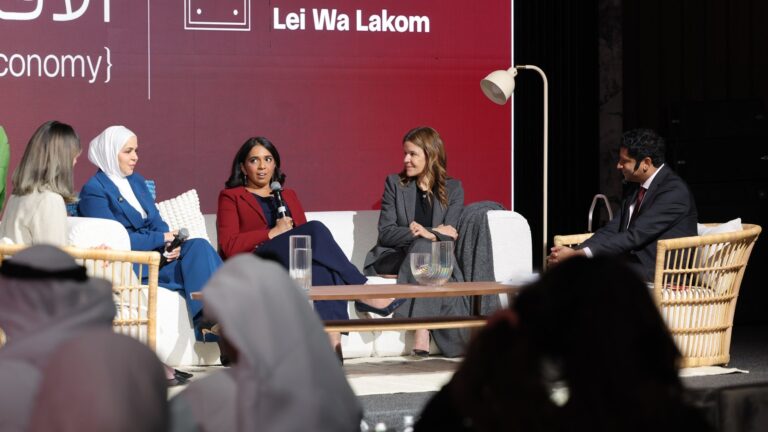
The high-level session formed part of the council’s 26th Global Summit and focused on rewriting assumptions about what drives success in the sector. Discussions centered on how connectivity, ease of travel, investment, regulation and joint government-business efforts shape decisions by travellers, companies and investors. Gloria Guevara, president and CEO of WTTC, said competitiveness is built through partnership. When governments and industry work hand in hand, they create the conditions for investment, innovation, connectivity and growth. Today’s dialogue demonstrated that stronger public-private collaboration is essential to securing the future of Travel & Tourism, she added.
The opening discussion examined the full traveller journey under the title Seamless Travel: Where Government and Industry Meet. It covered visas, border procedures, regulation, connectivity, technology, hospitality and logistics, according to WTTC. Participants considered how biometric systems and artificial intelligence can tighten security without creating unnecessary barriers. Effective coordination across every link in the tourism chain is required to deliver convenient experiences, a WTTC assessment found. Such alignment has grown more critical as global travel volumes recover and evolve.
WTTC’s latest Economic Impact Research places the sector’s contribution to the global economy at $11.6 trillion last year, equivalent to 9.8 percent of world GDP. The data shows it supported 366 million jobs, nearly one in every nine positions worldwide. Global Travel & Tourism is forecast to expand 2.5 percent in 2026, ahead of broader economic growth, according to the council.
In Europe, the host region for this week’s summit, the sector added nearly $3 trillion in 2025 or 9.4 percent of regional output while sustaining 40.7 million jobs. WTTC figures show European Travel & Tourism is projected to grow 3.1 percent this year, outpacing the wider European economy’s expected 1.1 percent expansion. International visitor spending across the continent is set to increase 5.8 percent, the research indicated. The Oman Observer reported on the WTTC call for enhanced collaboration as governments seek to replicate such gains in markets across the Gulf.
The dialogue brought together representatives from two dozen nations to explore practical ways governments and businesses can move policy, infrastructure and commercial priorities in tandem. Investment readiness, innovation and sustainable growth emerged as recurring themes throughout the talks, WTTC reported. Malta itself illustrates the sector’s significance, with Travel & Tourism forecast to account for 16.9 percent of its GDP and more than one in five jobs in 2026, per the council’s outlook.
WTTC has pursued similar partnerships in recent months, including a memorandum of understanding with the World Governments Summit Organization to exchange knowledge and promote joint initiatives on tourism policy. These steps reflect a broader push to prepare destinations for rising demand while addressing shared challenges. The Valletta gathering reinforced the council’s view that aligned public and private action will determine which markets capture future growth.