ع



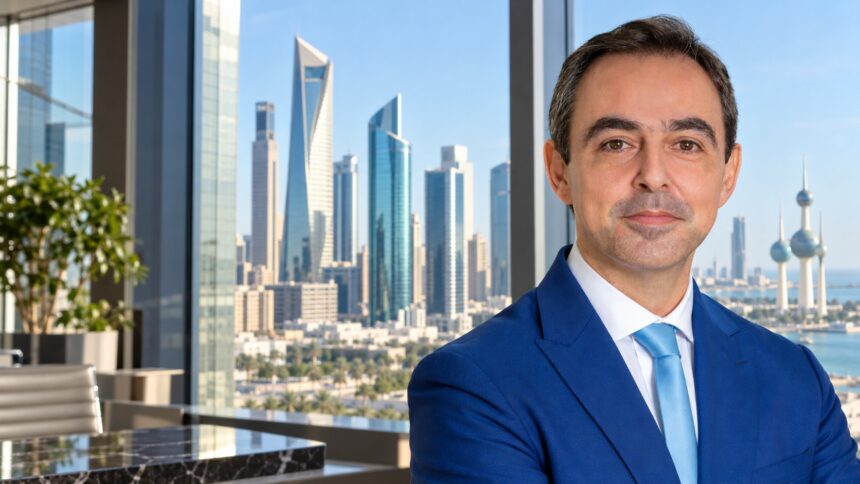
Meysan’s Kuwait-law role in the bank’s senior unsecured issue highlights how international sukuk bring together domestic and cross-border legal work.
Kuwait International Bank’s $500 million senior unsecured sukuk has added a different instrument to a funding programme previously used for a Tier 2 capital transaction. The September 2026 issue is due in 2031, giving the bank a five-year international financing alongside securities with a different place in its capital structure.
Meysan disclosed its role as Kuwait counsel to the joint lead managers, with partner Tarek Yehya, counsel Lama Abou Ali and senior associate Samar Jrade advising on the transaction. The certificates were issued through KIB Sukuk Limited under the bank’s $1.5 billion trust-certificate programme.
The transaction is significant because a programme is a platform for issuance, rather than a description of a single security. Its headline capacity does not make every drawdown identical. The character of each issue still depends on its own terms, ranking, structure and maturity.
A senior issue following a capital transaction
Greenberg Traurig, which also acted for the lead managers, described the September transaction as KIB’s debut senior sukuk. Its announcement said the deal followed a Tier 2 issue in October 2025 and was listed in London. It reported substantial oversubscription without providing a precise order-book figure.
That chronology helps distinguish two transactions that might otherwise look similar in a news feed. Both carry the KIB name and both use sukuk documentation. But senior unsecured financing and subordinated regulatory-capital financing perform different roles, so their amounts should not be combined into a single undifferentiated measure of capital raised.
The bank’s earlier $300 million sustainable Tier 2 issuance was described by its adviser Akin as due in 2036. The new issue’s 2031 maturity establishes a different funding horizon. The comparison is about structure and timing, not an assertion that one instrument is preferable for every holder.
Reading the disclosed economics
Meysan reported a Wakala/Murabaha structure, a Regulation S offering and admission to the London Stock Exchange’s International Securities Market. It gave the profit rate as 5.502%, equivalent to a spread of 95 basis points over the five-year US Treasury benchmark. Citigroup Global Markets and Standard Chartered were the joint global coordinators.
These details provide more information than the $500 million headline alone. The amount describes scale; the maturity describes the term; the profit rate describes the stated payment economics; and the spread situates the pricing against a specified benchmark at execution. Each is a separate piece of the transaction.
KIB’s pricing disclosure dated 3 September 2026, published through Boursa Kuwait’s disclosure infrastructure, identifies the issuer and $500 million principal amount. A market disclosure and an adviser’s announcement serve different readers, but reading them together connects the legal transaction to the issuer’s formal communication.
The spread is a pricing observation from that transaction. It should not be presented as a permanent measure of the bank’s risk, a forecast of future returns or a current secondary-market quote. Likewise, oversubscription describes demand during the book-building process, not the number of investors who will continue to hold the certificates throughout their term.
Why Kuwait counsel remains part of the structure
A London listing does not remove the importance of the issuer group’s home jurisdiction. The bank remains a Kuwaiti institution, while the distribution and documentation involve international participants. The disclosed advisory teams show that the transaction combined local legal work with international capital-markets advice.
There is a useful distinction between advising the bank and advising the institutions arranging or distributing an issue. The public statement places Meysan on the lead-manager side. That is the scope that can be reported; it would be inaccurate to broaden it into a claim that the firm alone structured or advised every party to the financing.
For corporate readers, this division of work explains why transaction announcements often name several advisers. Each appointment can relate to a different client, jurisdiction or body of documentation. The existence of several teams is not evidence of duplication, and a short announcement rarely captures the entire allocation of responsibilities.
A programme is not an outstanding balance
The $1.5 billion programme figure also needs care. It describes the programme under which the certificates were issued. It is not, by itself, a statement that $1.5 billion was raised in September, nor a complete reconciliation of KIB’s outstanding securities. That requires the bank’s disclosures on issuance, repayment and the relevant programme terms.
The distinction becomes especially useful when a programme supports more than one kind of certificate. A reader assessing a bank’s funding position needs to know which obligations mature when, and which securities qualify as capital. Adding announcement headlines together does not answer either question.
The practical significance of the September issue is therefore specific: KIB placed $500 million of five-year senior sukuk, and the disclosed legal work connected its Kuwait base with an international offering. The 2031 maturity creates a defined point in the funding calendar. Future reporting on the bank’s obligations can be assessed against that date and the instrument’s own terms.
For the market, a separate senior issuance also creates another reference point for comparing funding terms. Such comparisons still need to account for the issue date, maturity and position in the capital structure, rather than relying on the headline return alone.