ع




The Kuwait-based legal technology company will support a discussion with legal leaders from Kyndryl, Zahid Group and WPP, as corporate counsel examine how to put AI to work under clear oversight.
Oqood AI will take part in the General Counsel Conference Middle East in Dubai on 15 October, bringing a Kuwait-based legal technology company into a discussion about how corporate legal departments adopt and supervise artificial intelligence.
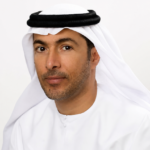
Founder and chief executive Khaled Al Rashed announced the company’s participation on LinkedIn, while the conference has identified Oqood as a thought leadership sponsor. The event is scheduled for Address Sky View and is organised by Law.com International in association with Global Leaders in Law.
The most concrete element of Oqood’s involvement is a panel bringing its team together with senior in-house lawyers. That pairing puts the focus on the people responsible for deciding where AI belongs in legal work, how its output is checked and what changes when it becomes part of a department’s routine.
A practical discussion with corporate legal teams
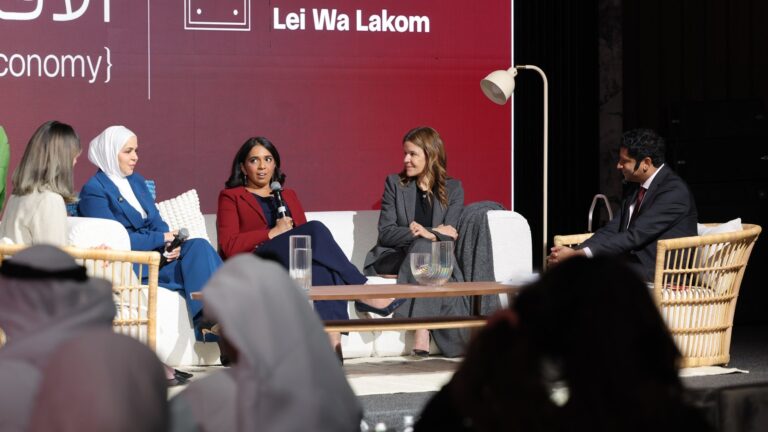
The published session programme names Mohammad Alterki, Oqood’s go-to-market and community lead, as moderator of the morning discussion on AI and legal practice, scheduled for 11am to 11.45am.
He will be joined by Tarek Nakkach, director and general counsel for the Middle East and Africa at Kyndryl; Matteo Grassani, general counsel at Zahid Group; and Rashika Bakshi, general counsel for India, the Middle East and North Africa at WPP.
The organisers say the discussion will examine AI’s effects on legal workflows, decision-making and expectations of corporate counsel. Its stated scope includes both areas where adoption is having an impact and situations requiring caution.
The composition of the panel gives it a specific operational focus. It brings together a legal technology provider and counsel working inside companies across different sectors and geographic remits. Their discussion is scheduled to address implementation, rather than announce a new product or a commercial agreement between the participants.
Adoption is changing the legal leadership brief
Independent industry research helps explain why the subject occupies so much of the programme. The Association of Corporate Counsel’s 2026 survey, covering 1,049 participants across 43 countries and 20 industries, found that 36% of legal departments were actively deploying generative AI.
It also found that 47% of chief legal officers identified technology and AI proficiency as the main area their chief executive wanted them to develop. Meanwhile, 63% expected staffing levels to remain stable as roles evolved.
These are international findings, not a measurement of adoption in Kuwait or the GCC. Nevertheless, they provide context for the conference’s emphasis on implementation and training: legal leaders are being asked to understand the technology while continuing to manage the people responsible for its use.
Resources remain part of that calculation. The same survey identified budget and resource constraints as the leading barrier to success for 35% of respondents, with operational efficiency the top strategic initiative for 53%. Taken together, the findings suggest that AI adoption is being judged against existing departmental pressures, rather than treated as a separate technology project.
A Kuwait-built platform returns to a Dubai forum
Oqood’s participation follows several years of development around Arabic and English legal work. A KUNA report carried by Kuwait Times in October 2023 recorded Al Rashed’s launch of the platform at GITEX Global in Dubai and traced its development to 2022.
At that stage, the platform was described as being tested with technology specialists. Its intended audience included lawyers, advisers and other users of legal information. That early account establishes the company’s history without treating its launch ambitions as evidence of later adoption or performance.
Today, Oqood describes its platform as a bilingual workspace for research, drafting, document review and related legal work. It places Arabic legal language and source citations at the centre of its approach, and says its legal team reviews material before it enters the database.
Those priorities explain the company’s relevance to a regional legal practice discussion. They bring language, the origin of legal information and the ability to check an answer into the same conversation as speed and automation. Oqood’s participation offers a regional provider’s perspective alongside the demands of in-house teams.
From AI policies to decisions on individual tasks
The wider conference programme shows how that discussion is expected to develop. A separate AI governance roundtable, led by LexisNexis Middle East and North Africa’s Lara Salem, will ask participants to assess a proposed legal or business use of AI.
Its published outline covers confidential information, accuracy, human review, vendor risk and accountability. Participants are expected to work with an assessment checklist, an approval and escalation framework, and questions for evaluating suppliers.
The exercise makes the governance question concrete: which uses should proceed, which need conditions and which should be declined? It also links technology procurement with the continuing responsibility to review work and decide who is answerable for it.
A closing plenary on legal talent will extend the discussion to recruitment, training, succession planning and preserving human judgment. The listed speakers include legal leaders with experience at Petromin, NEOM and Mashreq, with Brian Meenagh of Latham & Watkins moderating.
For Oqood and the in-house lawyers joining its panel, the immediate next step is therefore a specific one: testing the case for AI against the workflows, staffing decisions and approval processes of legal departments when the conference meets on 15 October.