ع



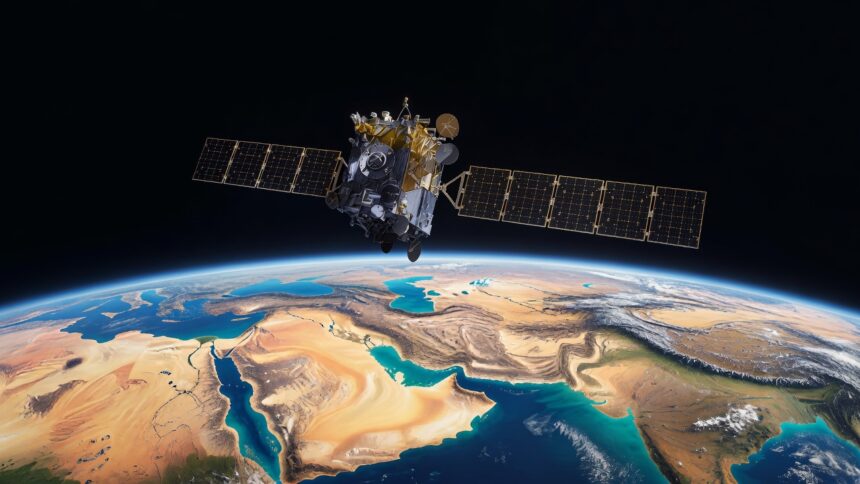
The UAE space program is translating technical achievements into commercial opportunities, according to the UAE Space Agency. Altair-1, the country’s first commercially built satellite, successfully reached orbit following its launch aboard a SpaceX rideshare mission on October 1, 2026, Orbitworks reported.
Orbitworks, based in Abu Dhabi, operates a 50,000-square-foot facility capable of producing up to 50 satellites per year, the company said. France secured capacity on the constellation through an agreement with Loft Orbital prior to the launch, multiple reports indicated. A subsequent $1 billion program aims to scale the system to 50 satellites, with manufacturing continuing in Abu Dhabi facilities.
These steps support the National Space Strategy 2031, which allocates more than Dh44 billion to expand the space economy, Gulf News reported. The plan targets doubling revenues from the sector, increasing its contribution to the economy by 60 percent and establishing the UAE among the world’s top 10 space-faring nations by 2031, according to UAE Space Agency officials. It additionally calls for doubling the number of companies active in space activities and boosting exports of space technologies.
Complementing the commercial satellite progress, the Technology Innovation Institute has advanced its work on the MBR Explorer probe for the Emirates Mission to the Asteroid Belt. The probe completed vibration testing and is currently in thermal cycle testing inside a vacuum chamber, TII officials stated on October 4, 2026. Shipment to Colorado for additional preparations is scheduled before the end of October, ahead of the mission’s planned March 2028 launch from Japan.
The mission will span eight years and five billion kilometres, involving flybys of six asteroids before a landing on 269 Justitia in 2036, The National reported. TII’s Propulsion and Space Research Centre led the probe’s design, integration and testing entirely within the UAE, with participation from local partners including HEX20 and Khalifa University. Twenty national engineers are acquiring critical deep-space expertise through the project, according to the institute.
The UAE Space Agency has emphasised that 50 percent of contracts for the asteroid mission were awarded to domestic private companies, aligning with broader efforts to build an industrial base. The national space sector currently stands at approximately Dh40 billion, with local firms contributing over 40 percent of output and commercial spending up almost 30 percent year-on-year, Aletihad reported. This commercial orientation builds on earlier prestige missions like the Hope probe to Mars while focusing on revenue generation and technology exports.