
 ع
ع


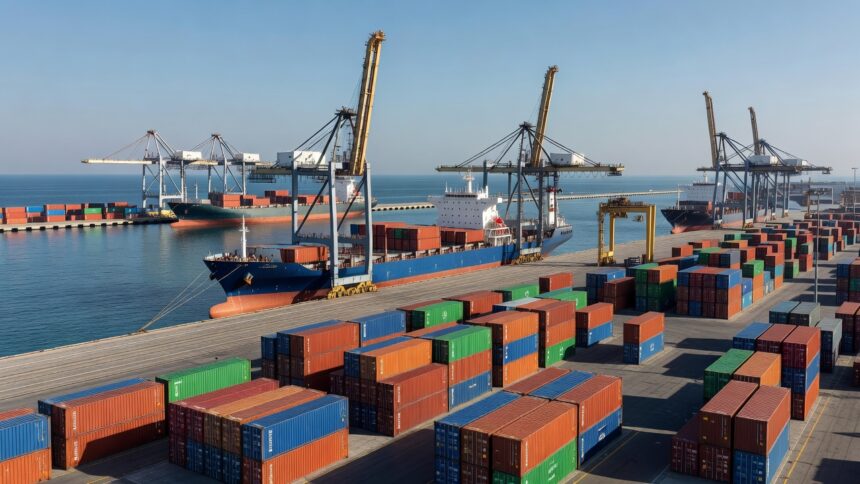
The Saudi Ports Authority has activated pre-emptive arrangements for transit shipments that are now in force at ports throughout the Kingdom, according to a Saudi Gazette report published on April 14, 2026. The protocols focus on advance coordination to ensure cargo that merely passes through Saudi facilities moves without unnecessary holds while satisfying all applicable customs declarations and security verifications. This structured approach targets reductions in vessel turnaround times and aims to limit congestion at major terminals handling high volumes of re-export activity. Officials associated with the rollout indicated that early preparation for such shipments creates a more stable operating environment for international shipping lines that rely on the Kingdom’s strategic location.
By emphasizing pre-arrival data exchange and compliance checks, the arrangements allow customs authorities to address potential issues before vessels dock, thereby smoothing the overall transit sequence from entry to onward departure. The measures apply uniformly to goods not intended for domestic consumption yet routed via Saudi ports for efficiency in regional distribution networks. Saudi Gazette noted that the system forms part of coordinated actions between port operators, regulatory bodies and carriers to uphold transparency at every stage of the process.
Saudi Arabia has recorded notable advances in its logistics capabilities under the Vision 2030 framework, which an official document sets out as a plan to lift the sector’s share of GDP from 6 percent to 10 percent by 2030. A Majalla assessment published in April 2026 stated that the Kingdom surpassed its target in the World Bank’s Logistics Performance Index by achieving a score of 3.4 in 2022. The same report placed Saudi Arabia second among G20 nations for cargo volume growth in 2025 with a 32 percent rise, while port capacity stood at 24.3 million containers against a longer-term goal of 40 million annually.
According to the US Department of Commerce country commercial guide issued in May 2026, the National Transportation and Logistics Strategy has already designated 18 new logistics zones with an objective of expanding to 59 by 2030 to create integrated supply chain ecosystems. The strategy incorporates smart port technologies and unified digital documentation platforms that accelerate clearance procedures at both maritime and land borders. Planned rail network additions exceeding 8,000 kilometers, including dedicated freight corridors linking ports to inland hubs, are positioned to support higher transit volumes managed under the pre-emptive framework.
The US Department of Commerce guide further described how these interconnected developments, encompassing port upgrades and multimodal links, reinforce Saudi Arabia’s connectivity across Asia, Europe and Africa. Mawani, the operating name of the Saudi Ports Authority, manages the facilities that process substantial shares of regional transshipment traffic. Earlier digital reforms referenced in the guide have produced measurable gains in processing speeds, providing a foundation for the latest transit-specific protocols to build upon.