Justice GCC
ar ع
  • Home
  • Legislation
  • Courts
  • Law Firms
  • Deals
Reading: Qatar Expands Strike Bans in Vital Sectors Under Amended Labour Law
Share
Justice GCCJustice GCC
Font ResizerAa
  • Legislation
  • Courts
  • Law Firms
  • Deals
Search
  • Home
  • Legislation
  • Courts
  • Law Firms
  • Deals
  • About
  • Corrections
  • Editorial Policy
  • Contact
Justice GCC > Legislation > Qatar Expands Strike Bans in Vital Sectors Under Amended Labour Law
Legislation

Qatar Expands Strike Bans in Vital Sectors Under Amended Labour Law

NewsDesk
Last updated: November 5, 2026 5:52 pm
NewsDesk
Share
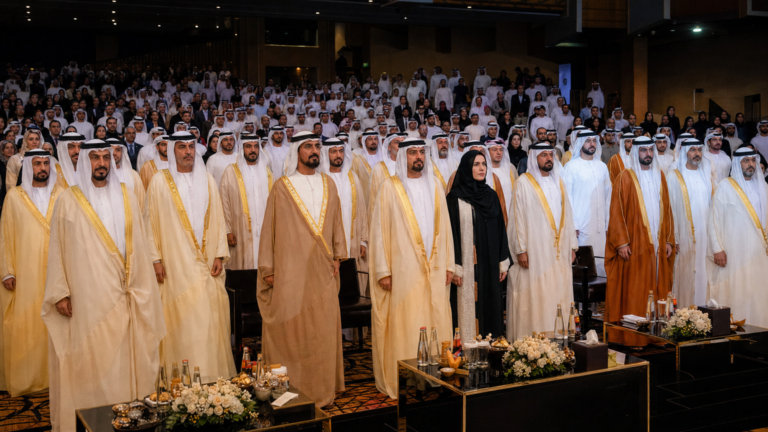
Qatar expands strike bans in vital sectors | AI-Generated Image
SHARE

Qatar’s Law No. 9 of 2026 amended the Labour Law to retain an outright ban on strikes across several essential industries, according to legal analyses from multiple international law firms. The prohibited sectors encompass petroleum and natural gas operations along with their derivatives, electricity and water utilities, ports and airports, public transport systems, and hospitals. A new provision further allows the Minister of Labour to designate other facilities as vital by administrative decision, extending the scope of the prohibition without the need for additional legislation. This change, which took effect after the law’s publication in the Official Gazette on June 25, 2026, reflects a broader effort to safeguard critical infrastructure.

Workers who participate in strikes within these vital sectors now face criminal penalties under the revised rules, a Legit.ng report on the amendments stated. Violations can result in imprisonment for up to one year, a fine ranging from 2,000 to 10,000 Qatari riyals, or both penalties combined. The introduction of these sanctions marks a significant shift from previous regulations that lacked explicit criminal consequences for such actions in protected industries. Law firm Crowell & Moring noted that the penalties align with increased oversight in the labour market following the 2026 updates.

Strikes remain permitted in non-vital sectors but only under stringent conditions outlined in the amended legislation, Pinsent Masons reported in its review of the law. Workers must first exhaust amicable settlement and formal dispute resolution processes, provide written notice to both the employer and the Ministry of Labour detailing reasons, demands and duration, and obtain necessary approvals. Any industrial action is limited to a maximum of six working days, confined to the workplace or workers’ accommodation, treated as unpaid leave, and must cease immediately upon initiation of collective dispute proceedings. Employers may hire temporary replacement staff during strikes with ministerial consent.

The amendments also mandate the formation of joint committees in all establishments employing 100 or more workers to facilitate dialogue between management and staff, according to an Al Tamimi & Company overview. Failure to establish these bodies can lead to fines between 2,000 and 5,000 QAR. Previously optional for smaller firms, the committees now serve as a required platform for addressing workplace issues before escalation to strikes or disputes. This requirement forms part of the law’s emphasis on structured labour relations.

A new ground for summary dismissal without notice or end-of-service benefits targets workers who incite colleagues to engage in unlawful strikes that disrupt operations, K&L Gates stated in its assessment of Law No. 9 of 2026. The provision aims to deter actions that undermine business continuity while preserving legitimate representation channels. Employers must document evidence of illegitimate incitement and resulting harm to invoke this dismissal ground. The changes coincide with other updates including extended non-compete periods up to two years subject to ministry approval.

Qatar’s labour reforms under the 2026 law have drawn attention for balancing worker rights with economic stability in a country where expatriates comprise the majority of the private sector workforce, according to regional legal briefings. The updates did not alter core entitlements such as minimum wage, annual leave or gratuity calculations. Implementation guidance through ministerial resolutions is expected to clarify operational details for employers across affected industries.


Share This Article
Email Copy Link Print
ByNewsDesk
Justice GCC NewsDesk is the desk responsible for Justice GCC's daily news coverage, monitoring and reporting developments across the Gulf from official sources, including national news agencies and government communications. Its focus is accurate, timely and factual coverage of the region.
Previous Article Barreto Holds Edge as Three Contenders Face Off for Baja Cup Title in Dubai
Next Article UAE Raises Driving Test Bar with 15 Criteria and 75 Percent Minimum Pass Mark

Popular Posts

UAE Federal Bodies Nominated in Seven Categories for Government Performance Award

On October 30, 2026, the UAE Government Media Office announced nominees for the Mohammed bin Rashid Award for Distinguished Government…

By
NewsDesk
4 Min Read
Kuwait Labour Rules Confirm Partial Years Count in End-of-Service Benefit Calculations

Kuwait has clarified that workers receive proportional end-of-service benefits for partial years…

3 Min Read
UAE Labour Law Guarantees Foreign Workers Paid Time Off on Public Holidays

UAE authorities have published the entitlements of foreign workers to full pay…

5 Min Read

More News

Oman Labour Law Details Grounds for Immediate Contract Termination Without Notice

Oman's Ministry of Labour has highlighted five specific conditions allowing…

November 5, 2026

Sheikha Latifa Inaugurates Dubai Design Week 2026 at d3 With Global Creatives

Sheikha Latifa bint Mohammed bin Rashid…

November 5, 2026

Global Village Promotion Grants Free Saturday Access for Friday Visitors in Dubai

Visitors to Dubai's Global Village who…

November 5, 2026

Sharjah Civil Defence Automates Delivery of Free Fire Damage Certificates

On Thursday, Sharjah Civil Defence Authority…

November 5, 2026

UAE Raises Driving Test Bar with 15 Criteria and 75 Percent Minimum Pass Mark

On November 5 2026 the UAE…

November 5, 2026

Recommended for You

Legislation

UAE Climbs to Fourth in Global Fintech Index as Central Bank Enables Innovation

The Central Bank of the UAE has advanced the country from 30th to fourth place in the Global FinTech Centre…

5 Min Read
Legislation

Saudi Ministry Reclassifies Labour Law Violations Into Activity-Based Categories

The Ministry of Human Resources and Social Development issued a ministerial order on February 25, 2026 reclassifying labour-law violations into…

3 Min Read
Legislation

Amnesty International Warns Kuwait Counterterrorism Measures Endanger Rights and Expand Death Penalty

Amnesty International stated on August 26, 2026, that Kuwait's counterterrorism legislation introduced amid the Iran conflict contains overly broad provisions…

4 Min Read
Legislation

Central Bank of UAE Enforces Enhanced Resilience Standards in Financial Sector Risk Rules

The Central Bank of the UAE brought Regulation No. C 1/2026 into force on September 14, 2026, requiring licensed financial…

3 Min Read

Categories

  • Legislation
  • Courts
  • Law Firms
  • Deals

Quick Links

  • About
  • Corrections
  • Editorial Policy
  • Contact
Justice GCC
© 2026 Justice GCC. Published by Peninsula News Group LLC. All rights reserved.
  • Privacy Policy
  • Terms of Use
  • Contact
Welcome to Foxiz

Sign in to your account

Username or Email Address
Password

Lost your password?