

 ع



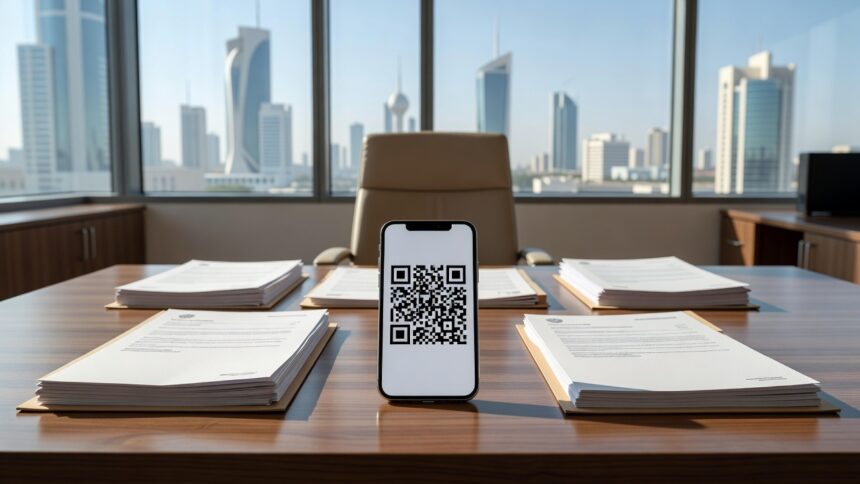
The Ministry of Commerce and Industry is advancing plans for a smart licence system that relies on integrated barcodes to verify commercial licences electronically rather than through multiple displayed documents, according to a report published on November 23. Acting Undersecretary Marwa Al-Juaidan stressed that regulatory authorities should adopt the QR code embedded in the smart licence as the primary verification tool. This shift would improve efficiency while speeding up inspection and service procedures for businesses across the country.
Al-Juaidan noted that the smart licence project launched in 2025 and coordinates efforts among nine government entities. Those bodies include the Kuwait Municipality, Kuwait Fire Force, Public Authority for Manpower, Public Authority for Food and Nutrition, Ministry of Information, Public Authority for Industry, Capital Markets Authority and Public Authority for Civil Information. The proposed circular renews earlier calls for these agencies to rely on the barcode for verification and requests them to report any obstacles that could hinder implementation.
The project forms part of a wider government strategy to strengthen electronic integration between public authorities, Al-Juaidan stated in the briefing covered by the Arab Times. Officials intend to gradually replace paper-based procedures with an integrated digital system that enhances transparency, simplifies services and improves the business environment. The undersecretary framed the move as a practical step toward reducing administrative burdens on commercial establishments.
This latest proposal builds directly on the ministry’s October 2025 launch of the Smart License initiative, which a ministry statement described as unifying approvals into a single barcode document. That earlier rollout covered 61 commercial activities, with a focus on automotive, transportation and heavy equipment sectors, and was developed in coordination with the Ministry of Interior. The current circular seeks to expand the system’s use for routine regulatory checks and daily compliance across additional government bodies.
Similar concerns about excessive paperwork appeared in local coverage the day before, when Times Kuwait reported on November 22 that businesses often must display numerous physical licences on their premises. The newspaper highlighted growing calls for a unified digital certificate or QR code that would allow instant electronic access to validity details. Such a system would eliminate the visual clutter of paper documents while maintaining oversight standards.
Kuwait’s Central Statistical Bureau data from recent years places the number of active commercial registrations in the tens of thousands, underscoring the scale of potential efficiency gains from digital verification. Al-Juaidan has urged all participating entities to fully engage with the transition to ensure the smart licence delivers measurable improvements in service delivery. The ministry continues to invite feedback on practical challenges that could arise during broader adoption.