ع



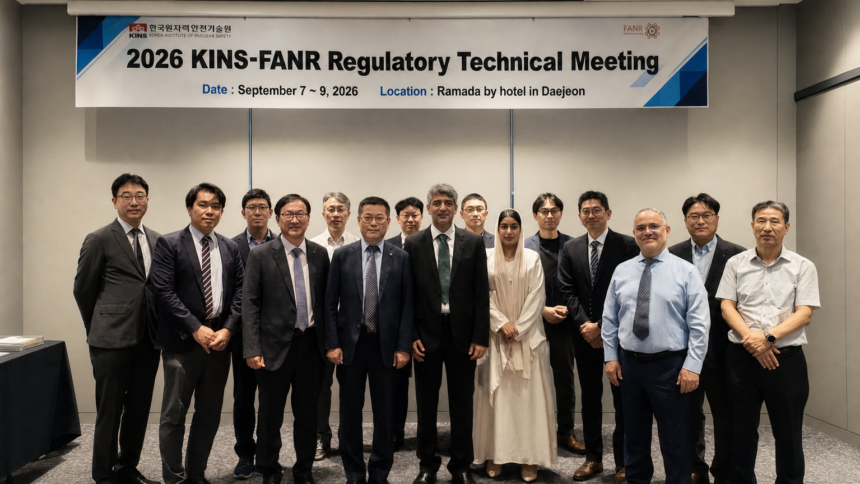
The Federal Authority for Nuclear Regulation participated in the annual Regulatory Technical Meeting with the Korea Institute of Nuclear Safety in Seoul to bolster technical cooperation in nuclear safety and the oversight of emerging technologies, the Emirates News Agency reported on October 8. Artificial intelligence featured prominently in the discussions, as FANR outlined its potential role in licensing procedures, facility inspections and knowledge management to boost overall regulatory performance. The Korean side presented its expertise in nuclear safety research along with regulatory strategies for small modular reactors.
Rashid Al Hammadi, FANR’s Director of Nuclear Safety, detailed the UAE’s regulatory journey with the Barakah Nuclear Power Plant during the meeting. He emphasised FANR’s ongoing supervision of the plant’s four operational units, which together generate approximately 40 terawatt-hours of electricity annually and supply up to 25 percent of the UAE’s electricity needs, according to the Emirates Nuclear Energy Corporation. Al Hammadi also outlined the authority’s adoption of risk-informed regulation and its methodology for evaluating adjustments to refuelling schedules while ensuring adherence to safety and spent fuel protocols.
The gathering built upon a partnership that began in 2010 between FANR and KINS, fostering continuous dialogue on nuclear sector advancements. Participants examined safety research, progress in advanced reactor designs and avenues to further strengthen regulatory skills amid evolving technologies, according to the Emirates News Agency. Opportunities for collaborative research projects, specialised training programmes and sustained knowledge sharing were also explored to maintain high standards of regulatory oversight.
FANR has been at the forefront of integrating artificial intelligence into its regulatory toolkit, as evidenced by the recent recognition of its Intelligent Operational Nuclear Safety system. In September 2026, the authority received the Innovation Award in the Artificial Intelligence category from the International Network on Innovation to Support Operating Nuclear Power Plants, a body established by the International Atomic Energy Agency. The IONS platform, created in partnership with the Mohammed bin Rashid Space Centre, leverages AI to monitor environmental factors around the Barakah plant and predict climate-related risks to nuclear infrastructure.
The system collects data on variables such as sea levels, temperatures, vegetation and seismic activity to provide real-time insights and forecasts, WAM reported. This capability allows for better preparation against external hazards and supports long-term resilience of nuclear operations in the face of climate change. FANR’s work in this area aligns with broader national goals to harness advanced technologies for regulatory excellence.
To support its expanding responsibilities, FANR continues to invest in national capacity building and international partnerships across the nuclear domain, a WAM assessment found. The authority’s participation in such technical meetings enables the exchange of best practices that inform its oversight of the UAE’s growing nuclear programme. Such engagements are expected to contribute to the safe and secure development of nuclear energy in both countries.